Unique Humiliations
A Conversation with Tasbeeh Herwees


Almost every week Tasbeeh Herwees has a new ground-breaking, watercolor report on the cultural scene of Los Angeles. My skepticism of the West Coast is hardly a secret. Nearly every time I go to LA, something bad happens to me. I was recently in town to report on a Bari Weiss talk that got cancelled. Everyone was talking about her recent essay on LARB. Her indispensable reporting continues to come out of No Bad Days. We spoke about Substack, free speech, local journalism, and smoothies.
How did No Bad Days in LA start? And can you guarantee this?
No Bad Days is less of a guarantee and more of a manifestation. There are always bad days, but it’s easier to get over the minor trials and tribulations of contemporary life when it’s consistently 70 degrees outside. I’ve never really lived anywhere else, so I can’t imagine what it’s like trudging through the snow only to be humiliated by a situationship. But of course LA deals its own unique humiliations, which even the sun can’t sanitize.
I started No Bad Days in May of last year. It’s something I’ve been thinking about for many years, but I finally decided to just do it because I had been laid off from my tech job in January 2025. I love local reporting, but didn’t find anywhere to do that besides the LA Times, which has its own issues.
I also really wanted to build something more community-focused. LA’s physical gathering places, like our beloved Taix, are at constant risk of closure and demolition. We no longer have a strong alt weekly reporting on the sub-cultures and underground communities that make LA really fun. I wanted a place where young writers could try out experimental forms of reporting or do things they can’t do at other outlets. I just commission some really fun work I’m excited to publish!
You have reported a lot on the hostile climate in the media world in LA, do you see any big patterns emerging? Especially in regards to free speech and the ongoing genocide in Gaza?
Absolutely. In my interview with Sara Yasin, we talk a little bit about how local media came after her for tweeting an article by Raz Segal, the Holocaust scholar. One of those people in local media was The Wrap’s Sharon Waxman. She published a number of articles parroting the claims that Sara was a Hamas sympathizer, which, for a Palestinian in that kind of position at a traditional media institution, is a career-ending accusation.
That was, what, two years ago? A couple of weeks ago Waxman tweeted about moderating an Oscars panel with Kaouther Ben Hania, the writer/director of the Voice of Hind Rajab. Which, by the way, was the target of a really ugly propaganda campaign.
It’s honestly pretty distressing to see all these people who worked so hard to silence dissent or even censor journalism about the genocide in Palestine suddenly and quietly changing their positions now that the truth is too hard to deny. Now that Rafah is flattened. Now that the Kushners are presenting plans for the redevelopment of Gaza. It’s becoming easier and easier to speak up about Palestine now that the ethnic cleansing project is near complete. I get fewer and fewer objections in my comments about calling it what it is. Organizations like the LA Review of Books are publishing work by and about Palestinians as if they weren’t involved in the censorship of that work just a few years ago. It’s insane to me that no one has the balls to say, “I made a mistake.”
Do you feel a freedom to represent your sources and subjects that might not happen in other more mainstream news outlets?
For sure. Anyone who’s worked for traditional news outlets has felt the pressure to make edits or changes that don’t necessarily align with how they think the story should be reported. Many years ago now, I profiled the three founders of the Black Lives Matter movement and ended up making a number of concessions to my editor, who was a kind of clueless white guy, that I regret making. I think the story was worse off for it.
I think my report on the LA Review of Books would have looked a LOT different had I published it with another outlet. I don’t think I would have been able to publish a lot of those anecdotes, even though I had a lot of supporting evidence and testimonies. The same goes for my interview with Sara Yasin. A lot of these journalism institutions are really held back by old ways of doing things.
How in the world did you get so much access for the LARB piece? Even if you don’t share specifics— it seems like a coup. Getting so many people to trust you and share there story. Ditto on The Key.
I’ve lived in LA my whole life and have spent a lot of time cultivating relationships with people in different industries. I think a lot of the people who spoke to me trusted me already. And they also helped me gain the trust of the sources who didn’t know who I am. I also try to approach sources with a lot of empathy and understanding. I think journalism school—which I went to—as well as working in traditional news journalism trains you to be a little cold and somewhat removed from your subjects. Or that you have to approach them with skepticism. I didn’t approach anyone with skepticism and made them feel like their story would get told with compassion.
With the Key, Sara is a very old friend of mine and approached me because she knew that No Bad Days was the right place for it. It’s a small newsletter but it has a lot of reach, especially in the LA media community. I have a lot of heavy-hitter subscribers.
Why LA? Take it as abstract or specific as you want. I am but a humble New Yorker with a lot of confusion over West Coast culture and geography. Further, do you think there’s a big divide or rivalry between the two?
LA because it’s big and beautiful and diverse and misunderstood. LA is a city whose love you have to earn. And that love is literally and figuratively like feeling the sun beaming on your face. Learning how to navigate this city and building community here and making it a home is really gratifying because it’s so hard.
I’m never bored here. There’s always something to do and somewhere to be. I do think the places in New York that feel rarefied and difficult to access are not so here. You can sneak your way into any party or pool. I find that people are less interested in what I do for work here. There’s freedom in that. I don’t know what a lot of my friends do for work.
I personally find that taking public transit in Los Angeles, as rare as that is for a member of my demographic, has really made the city more enjoyable for me. It takes a little longer than usual to get places but it slows down the pace of my social life in a necessary way. It makes me feel connected to a greater human project, versus the loneliness that a lot of people experience in their cars. And it saves me a lot of money.
I don’t really pay attention to city rivalries. I’m sure that rivalry exists. But I love New York! I try to spend a month in New York every year. But at the end of the month I always want to go home.
Who are people in LA you think should be getting more coverage and respect?
What we lost with the alt weeklies was coverage on the subcultures and underground communities that make Los Angeles really great. For example, when I saw the LA Times publish an article about a “jazz renaissance” that neglected to mention any indie jazz institutions, I knew I wanted to publish an interview with Yousef Hilmy, the founder of Minaret Records, in response.
I think about Nacho Nava a lot. He was the founder of Mustache Mondays, but he died in 2019 before anyone could really profile him. He had an indelible influence on LA queer nightlife. You could go to Mustache Mondays and see Big Freedia, Kelsey Lu, Kelela. He was an incredible figure but no one really profiled him or the work he did until after he died, which makes me so sad. That was work that an LA alt weekly could have done. But we don’t have those! Nacho is one of the people I thought about when I started No Bad Days.
Lately, I’ve been thinking about the wonderful gay guys who host Gay Guy Night at Taix, which will be closing down soon. I think about DJ Bae-Bae who founded Hood Rave. I think about places like the Smell, an all-ages punk institution that has nearly closed down too many times to count. I think about people like Maddie Phinney and Chloe Coover who throw these amazing perfume swap parties called White Smelephants. I think about places like Murmurs Gallery and Frank News. People have been panicking about the state of post-pandemic LA, about its “death spiral”. I don’t see that! Everyone I know is working on the margins of mainstream culture, making beautiful things and creating beautiful spaces despite what’s happening in the institutions. I’m personally having a wonderful time.
Over/Under for Writers
Hailey Bieber Smoothie
I’m neutral. I never had it myself but I feel like if you come to LA for the first time in your life you should try at least one overpriced smoothie! I prefer the overpriced smoothies at the Punch Bowl in Los Feliz (~$15).
The Scientology Headquarters
Quick story: In my 20s, I had freshly broken my nose and was experiencing a full body eczema breakout in some kind of psychosomatic trauma response to something that had happened to me. I decided to take a free tour of the headquarters with a friend from the internet and our guide was so distracted by the scars and skin rash she didn’t even bother to proselytize to me. She was just like, “Ma’am, what happened to you?” I do not recommend the tour, which is just an opportunity for them to collect your data. I’m also convinced their surveillance cameras are equipped with some kind of facial recognition capability…
In N Out Animal Style
Under! I tend to take In n Out for granted but every time I’m showing a friend from out of town around, I’m like, oh yeah, this is why people love this place. My personal order however is cheeseburger with chopped peppers.
Sally Rooney
Under. I’ve read only one of her books but it’s so refreshing to see a writer exhibit some courage.
Staff Writer Jobs
I’ve only had one, more than ten years ago, so I really can’t say. Can someone tell me??
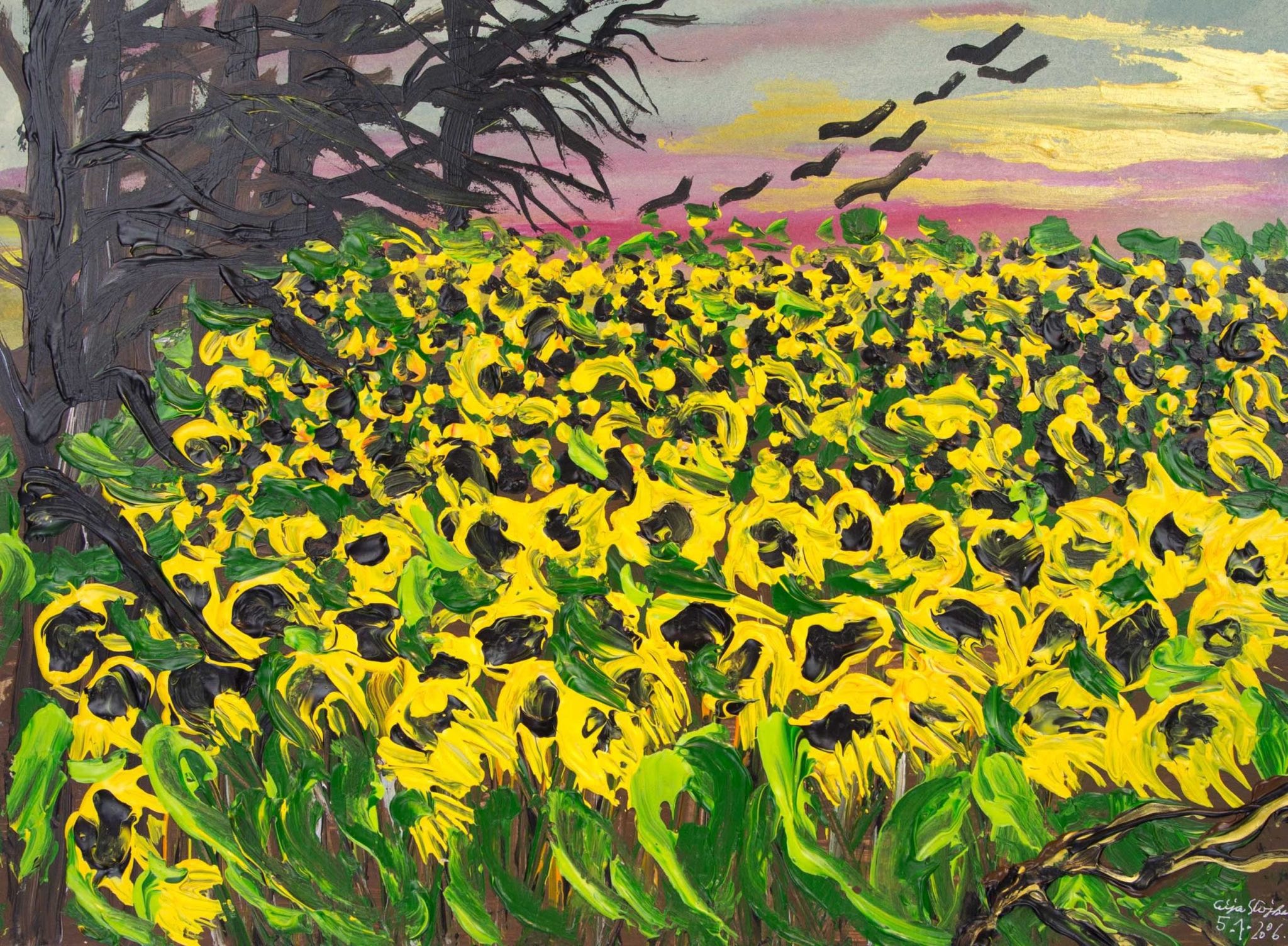
Image credit: Ceija Stojka.
 | A guest post by
|