Smuggling Healthcare
On hospitals, bodily autonomy, MAHA, and faith

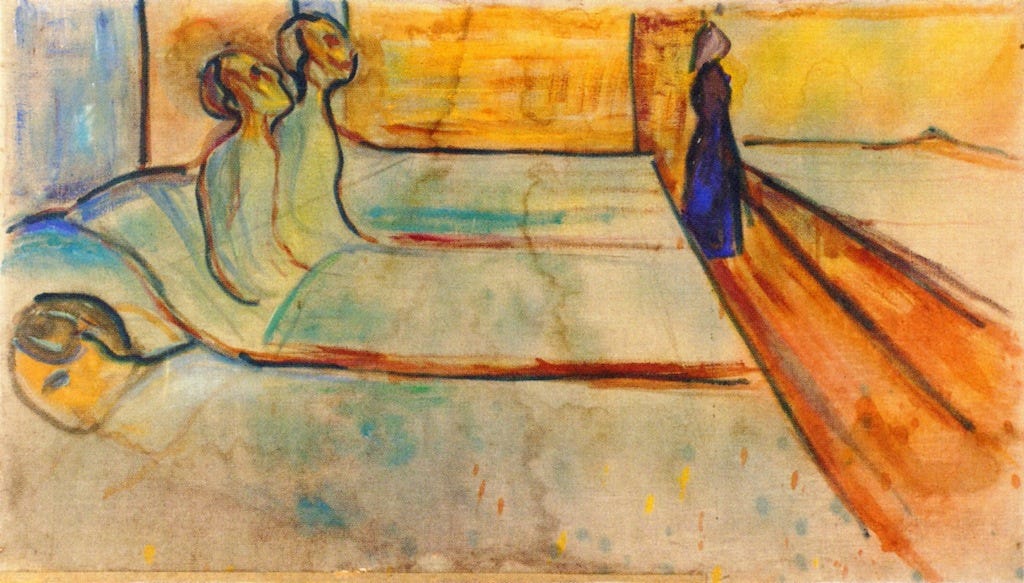
The hospital took something from me. It also replaced absence with presence, experiences both frustrating and fruitful. For a long time, I believed I was swimming only in loss. My years in the hospital were also marked by death. I should’ve seen that time as a chrysalises, but even now I bitterly resent the things stripped away from me, a world of pleasant illusion.
I am not sure when my life irrevocably changed, when we slipped into what my friend M called the twilight zone, but by the time I began my many years in and out of the hospital it was in full effect. The gossamer threads of our world seemed to float away into the sky. Time itself seemed a medium we no longer dealt in, a lost currency from another epoch.
I have joked privately before that I feel like Saint Paul, given all forms of temptation so that I can relate to all people. Even if I no longer feel called to minister under the banner of Christianity, I still feel the call to soothe the bereft. In the same way, I feel that I have gone to the hospital for a litany of ailments: a broken lung, suicidal ideation, plastic surgery, a sex change. Similarly, I have dabbled in most modalities of therapy. After surviving conversion therapy, I had to try a stunning number of practices in order to feel whole once again. CBT, psychoanalysis, DBT, mindfulness, EMDR, and so on.
The hospital is a liminal space—like the airport or a synagogue. Healthcare is a teacher. Being forced to rely on a system tied up with the state compels and coerces us to learn fortitude, patience, interdependence, pleasure, and even love. Sometimes the absence of a quality is a great friend in pushing us towards our desires at a later date.
When I was in the hospital, I confronted a variety of ideas about the world and myself that I had been holding at bay. When I first moved away from Indiana to New York I shied away from myself. I was an observer, like Nick Carraway, afraid of learning too much about my interior monologue. Even in therapy I was more concerned with rumination than introspection. When my lung collapsed and I was terrified I might die, I touched something on the other side. It was not, to be clear, a near-death experience, but I discovered a placid lake down at the bottom of my existence. It is not a place I can stay, not in the tumult of the everyday, but I have found it’s worth a visit every now and then. It is easiest to discover such an oasis in sacred places.
Around the same time my hospital-mania started, I began searching out a new faith tradition. I have always been spiritual even if I struggle with the idea of God. I read theology for fun. My youth pastor used to tease me about reading Nietzsche, saying the philosopher didn’t believe in art, yet there I was, writing in my notebook. Some things don’t change.
First, I tried the Buddhist sangha. I had always been seduced by mystics and like many young melancholics. I read the dervishes and the Zen koans with equal attention, devouring traditions like a seeker without discipline. The sangha seemed a way to learn practice. When I first entered the temple, I was terrified. I had to try three times to ride the elevator up without having a panic attack. When things went on Zoom, it was easier to attend in silence. It was only one of the faiths I’d dabbled in since leaving the Evangelical church in high school. I went to my first Catholic service at the late age of seventeen. Later, I went to Universalist Unitarian services were Rilke and Wicca were held in the same regard. Not that long ago, I went to my first Quaker meeting at a James Turrell exhibition. Each prayer I learned would later keep my company in the long silent hours of the clinic. Now, post-hospital, I am converting to Judaism. One day soon, God-willing, I will have a mikvah.
I cannot separate the mind from the body, faith from lust, health from architecture. The past few years I have seen the inside of an ICU room in Woodhull, NYU Langone, Mt. Sinai, and Northwell. (New York Presbyterian and Lennox Hill are on my wishlist.) The time I spent in hospitals did not teach me anything—-not in the moral sense of the word—but it did chew me up and spit me out, reminding me of certain celestial rules the world sticks to in times of chaos.
Healthcare is at a crossroads. Not everyone in the US is receiving treatment and certainly some politicians would like to further limit who is worthy of medical attention. The past few years have seen more and more people forced to seek DIY and underground solutions to their illness. Abortions, hormone replacement therapy, insulin, psychiatric care.
Having spent my life in hospitals, I have a nostalgia for plastic trays, stale coffee, and sugary cups of orange juice. I’m a bit of a surgery junkie with a sentimental love of medical institutions even as I know they have been the cause of enormous harm. Our reliance on the state distresses me. I would like to find care outside of such institutions---certainly they’re crumbling in the face of pressure from far right politicians. We must somehow create our own spaces in the coming years. Many already have. But these shadow networks of care, perhaps as necessary as they may be, are no substitute for the vast systems we already have. Burnout is always a present danger. This is a dangerous crossroads.
Smuggling healthcare is not a possibility for all. But it can offer one way forward. While staying in hospitals, I learned how to ask for support and give it. I was not historically someone who’s adroit at giving and receiving care. I preferred to bottle things up until they came pouring out. Sometimes this is still my position but I know from experience the rewards and discipline of creating small networks of care. Many trans people I know are adept at giving each other support after major surgery: meals, babysitting, help cleaning, grocery shopping, errands. In the wake of ICE raids across the country, we’re seeing even larger scale systems crop up to take care of vulnerable and targeted populations. This is a form of healthcare under fascism, an attempt to strength the bodily autonomy we all deserve. Despite dire consequences, many are fighting back.
The threat to bodily autonomy is not new. Far-right regimes throughout history fear body modification of all kinds from vaccines to abortion to trans healthcare. From Weimar Germany to the Tenderloin in the 1950s and 1960s, the right to change sex, to do what one wants with their body, has faced intense surveillance. The troubled history of bodily autonomy and sex changes is filled with revolutionaries and wild women doing their best to enact the freedom of bodies even in small ways under troubled regimes.
The politicization of bodies as expendable, unruly, and toxic has blossomed in recent years through the Make America Healthy Again movement, a viciously anti-science coalition led by RFK Jr. But such ideas are not without precedent.
Changing sex is often seen by far-right critics as a pollution of the body---an irreversible damage. Instead the body should be “natural” and “untouched.” This argument is not dissimilar to the Nazis argument about eugenics and their desire to sort bodies into good and bad, natural and unnatural, abled and disabled, right and wrong. Doctors became the experts, a troubling power dynamic that persists to this day. My time in hospitals has not been without such struggles. The right to change is always under attack, but has never been quashed.
Hospitals can reinvigorate our sense of justice, our ability to distinguish treatment from care and life from living. They carve into us, hollow us out, and then, hopefully, return us to the “normal” world. Sometimes, however, they fail. Sometimes we are left in purgatory, wandering around the bardo, unsure of how to reintegrate with the sentient world.
From lung repair to psychiatric care to gender-affirming surgery, I have left the animated crowds of New York for a small white room and returned, reborn, somehow both more and less certain of what constitutes the contours of our mundane existence. To move forward, we must somehow re-conceptualize care. It won’t be an easy lift. Hospitals are a tough act to follow, their triumphs and missteps originate from a thick, overly-official grimoire. An alternative code of conduct would start by considering patient care something more ephemeral than what can be answered on a patient satisfaction survey.
Every time I think I have an original trans experience I read one of my sisters’ words/thoughts and realize we have so much in common. Thank you for this, diva